What Is the Difference Between Standard and Premium Cataract Surgery Lenses?
Cataract surgery includes a lens implant decision that affects daily vision for years afterward. Understanding the difference between standard and premium intraocular lenses is the starting point for choosing one.
What Is the Difference Between Standard and Premium Cataract Surgery Lenses?
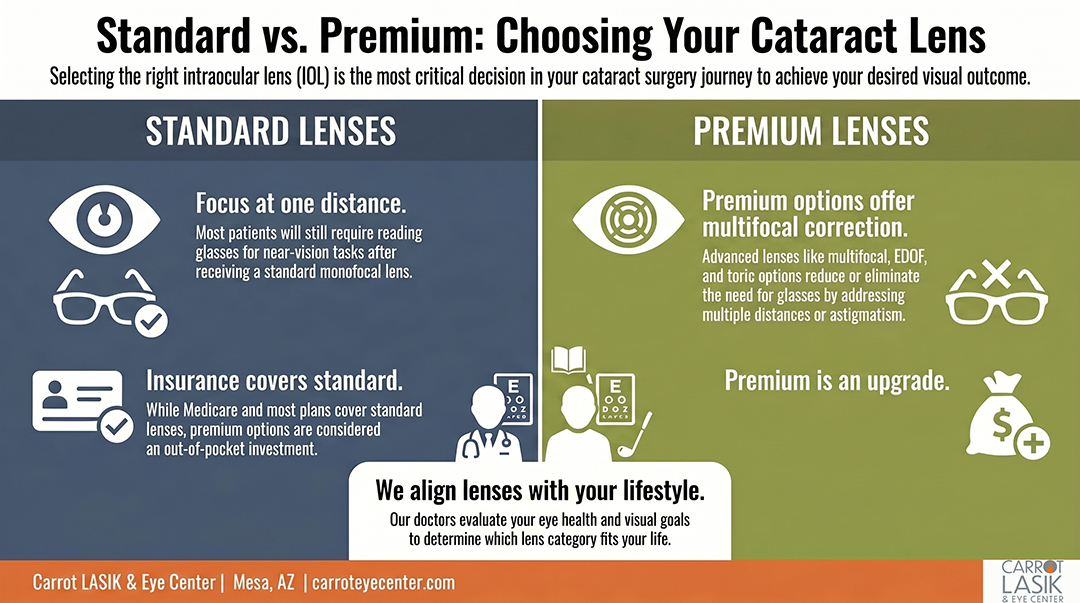
Standard cataract lenses correct one focal distance; premium lenses correct multiple distances or astigmatism, depending on the type. Standard monofocal IOLs leave most patients wearing reading glasses afterward. Premium options — multifocal, EDOF, toric, and light adjustable — reduce or eliminate dependence on glasses. The tradeoff is cost. Medicare and most insurance plans cover only the standard monofocal, so premium lenses become an out-of-pocket upgrade.
At Carrot LASIK & Eye Center in Mesa, AZ, Dr. Matthew Hammond and Dr. Michael Herion — both board-certified ophthalmologists and Fellows of the World College of Refractive Surgery — evaluate each patient’s prescription, lifestyle, and eye health to determine which lens category aligns with the visual goals they want after cataract surgery.
Will I Still Need Glasses After Cataract Surgery with a Standard vs. Premium Lens?
Most patients who receive a standard monofocal lens still need glasses for reading, computer work, or both after cataract surgery — the lens corrects one focal distance only. Premium lenses (multifocal, EDOF, or light adjustable) are designed to reduce glasses dependence across multiple distances. Toric premium lenses also correct astigmatism.
Carrot’s cataract surgeons in Mesa discuss expected visual outcomes with each patient before surgery, including realistic expectations for glasses use based on the selected lens type. Dr. Hammond and Dr. Herion provide their personal cell phone numbers to every surgical patient so questions about post-operative vision can be addressed directly.
Who Is a Good Candidate for Premium Cataract Lenses vs. Standard?
Candidates for premium cataract lenses typically have healthy retinas, no significant corneal irregularities, and realistic expectations about visual outcomes. Lifestyle often guides the choice. Patients with active routines who want to reduce dependence on glasses at multiple distances are common premium lens candidates. Standard monofocal lenses generally suit patients comfortable wearing glasses for some tasks, or those with retinal conditions, corneal scarring, or other eye health factors that limit premium lens performance.
At Carrot LASIK & Eye Center, Dr. Hammond and Dr. Herion perform detailed preoperative evaluations — including corneal mapping, retinal assessment, and lifestyle discussion — before recommending a specific lens category. Both surgeons are Castle Connolly Top Doctors with over 20 years of experience each in ophthalmic surgery.
What Is a Standard Monofocal Cataract Lens and What Does It Correct?
A standard monofocal intraocular lens (IOL) replaces the eye’s natural lens during cataract surgery and focuses light at one set distance, usually far. Coverage is broad: Medicare and most private insurance plans pay for the monofocal option in full. Worldwide, they’re the most common cataract lens. After surgery, patients typically achieve clear distance vision and rely on reading glasses or bifocals for near and intermediate tasks.
What Types of Premium Cataract Lenses Are Available in Mesa, AZ?
Premium cataract lens options as of 2026 fall into four categories. Multifocal IOLs like AcrySof IQ PanOptix correct vision from near to far. Toric IOLs handle astigmatism. Extended depth of focus lenses (AcrySof IQ Vivity, Tecnis Odyssey) extend intermediate-to-far range. The RxSight Light Adjustable Lens is customizable after surgery, with its prescription fine-tuned using UV light treatments. Mesa, AZ practices typically offer multiple premium options.
Carrot LASIK & Eye Center in Mesa offers multiple premium IOL options and performs laser-assisted cataract surgery. Dr. Hammond and Dr. Herion — both Fellows of the World College of Refractive Surgery — match each patient’s lens selection to their specific prescription, astigmatism level, and daily visual demands.
How Much More Do Premium Cataract Lenses Cost Compared to Standard Lenses in Arizona?
As of 2026, standard monofocal cataract lenses are typically covered in full by Medicare and most private insurance, with patients paying only standard copays and deductibles. Premium lenses cost more. The upgrade from a standard to a premium IOL is not covered, so out-of-pocket fees generally range from $1,500 to $4,000 or more per eye. Exact pricing varies by lens type, surgeon, and Arizona practice location.
Carrot LASIK & Eye Center in Mesa, AZ provides a detailed cost breakdown during the preoperative consultation, including what Medicare or insurance covers for the standard portion and the patient’s out-of-pocket cost for the premium upgrade. Flexible financing options are available.
What Are the Temporary Visual Tradeoffs of Premium Cataract Lenses?
Premium multifocal and EDOF cataract lenses can produce visual side effects, most commonly halos or rings around lights at night and mild glare. These effects appear during the first one to three months as the brain adapts to the new optical system. Most patients see them fade over time. Toric IOLs and the Light Adjustable Lens typically produce fewer nighttime visual disturbances than multifocal designs.
Carrot’s surgeons in Mesa discuss potential visual tradeoffs with every premium lens candidate before surgery. Dr. Hammond and Dr. Herion have each undergone vision correction surgery themselves, which informs the practical, experience-based guidance they provide during the lens selection process.
Does Insurance or Medicare Cover Premium Cataract Lenses?
As of 2026, Medicare and most private insurance plans cover the cost of standard cataract surgery, including the monofocal IOL, surgeon fee, facility fee, and basic follow-up visits. Premium lens upgrades are classified as elective. Multifocal, EDOF, toric, and light adjustable lenses are not covered by Medicare Part B or most insurers. Patients pay the difference between the standard covered lens and the premium lens out of pocket.
Carrot LASIK & Eye Center’s surgical coordinators help patients understand their specific insurance benefits and out-of-pocket costs for premium lenses before scheduling surgery. The practice is a Joint Commission–accredited facility serving patients across Mesa and the greater Phoenix metro area.
Schedule a cataract lens consultation at Carrot LASIK & Eye Center in Mesa to discuss which lens option fits your vision goals. Call (480) 561-6000.
from Carrot LASIK & Eye Center https://ift.tt/8LWNZ5U
via Carrot LASIK & Eye Center

Comments
Post a Comment